A new royalty splitting and payment product for The Orchard, Sony Music's distribution platform,
helping labels manage complex artist payments at scale.
Role
Lead Product Designer
Client
Sony Music · The Orchard
Timeline
12 Months
Status
Shipped
The Challenge
Keeping customers through better tools
The Orchard needed to retain customers in a competitive market. They developed a three-pronged strategy:
Strategy 01
Provide better business intelligence
Strategy 02
Better tools for managing content
Strategy 03
Accounting tools that set us apart from competitors
How might we provide accounting tools that help our customers better run their business?
Market Analysis
Finding the gap
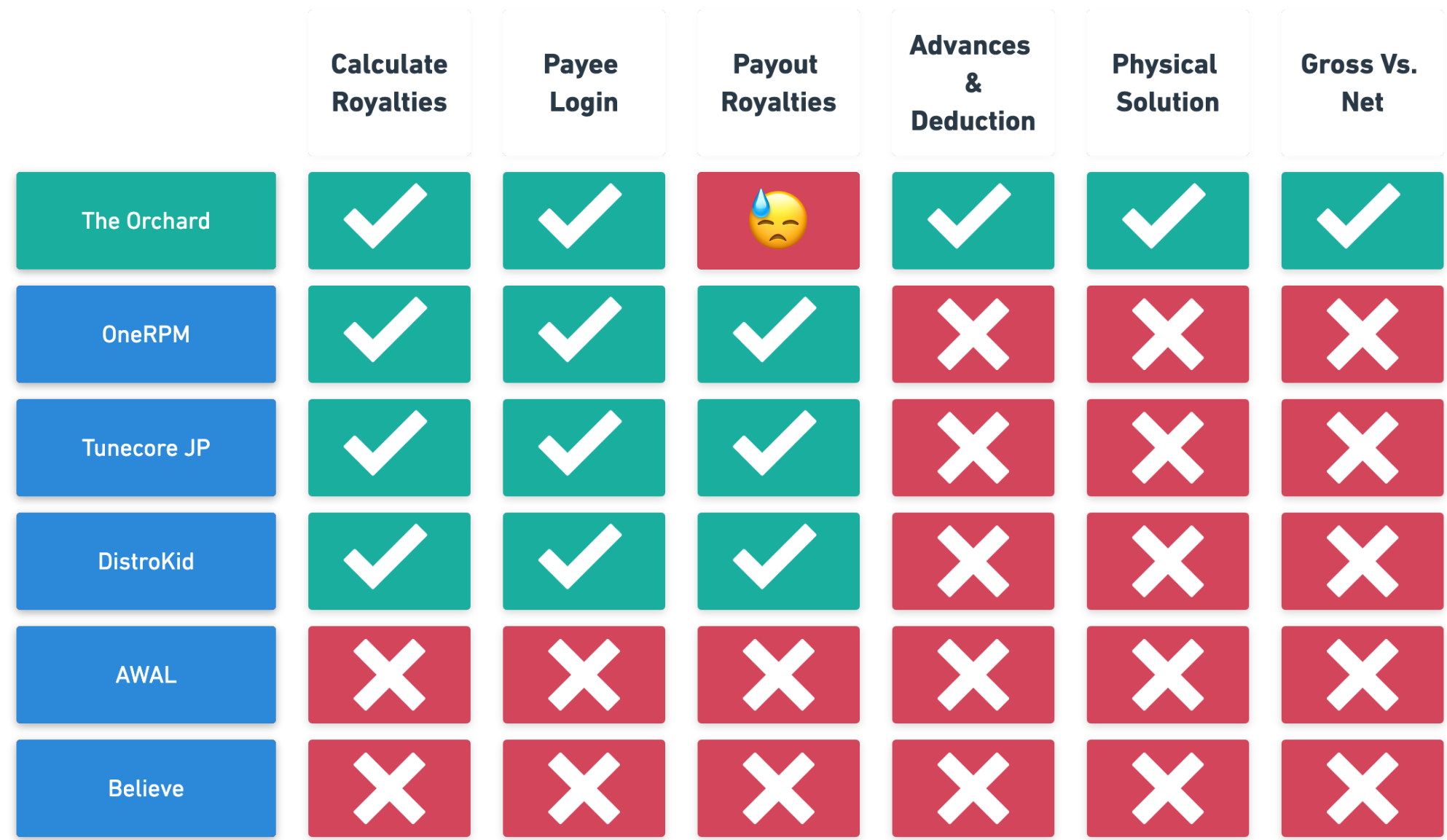
The Orchard was competitive in most areas, except for one critical feature: paying out royalties.
This was a glaring miss in an otherwise strong product offering.
We were matching most of the market, but had one glaring miss.
User Research
Understanding the workflow
I recruited users to understand how they currently manage royalties, gathering detailed information
about their business size, number of artists, statement formats, and calculation methods.
The research confirmed our hypothesis: royalty management was the most important pain point for
our customers.
"Being able to split our net revenue by release to pay band members would be great."
"Really looking forward to see how you include a royalty tool which would take away tons of work,
as we still do royalties by hand for each product. :)"
Pain Points
Four distinct user needs
Through interviews with defined personas, we identified specific pain points across different
types of users in the music distribution ecosystem.
🏢
Record Label
"Accounting is getting complex and doesn't provide returns. More technology is needed,
and I'm not great at that."
📡
Distributor
"I can do the technology, but customers don't know me as an authority when it comes
to accounting."
🎤
Artist
"We are spending too much time and money figuring out how much we are owed and who
we have to pay."
🎵
Collaborator
"It takes forever for me to get paid, and I'm not sure it's clear that I'm getting
the right amount."
Solution
Designing the payment flow
After gathering user feedback, I designed an interface that balanced complexity with usability.
The system needed to handle intricate royalty calculations while remaining accessible to users
with varying technical expertise.
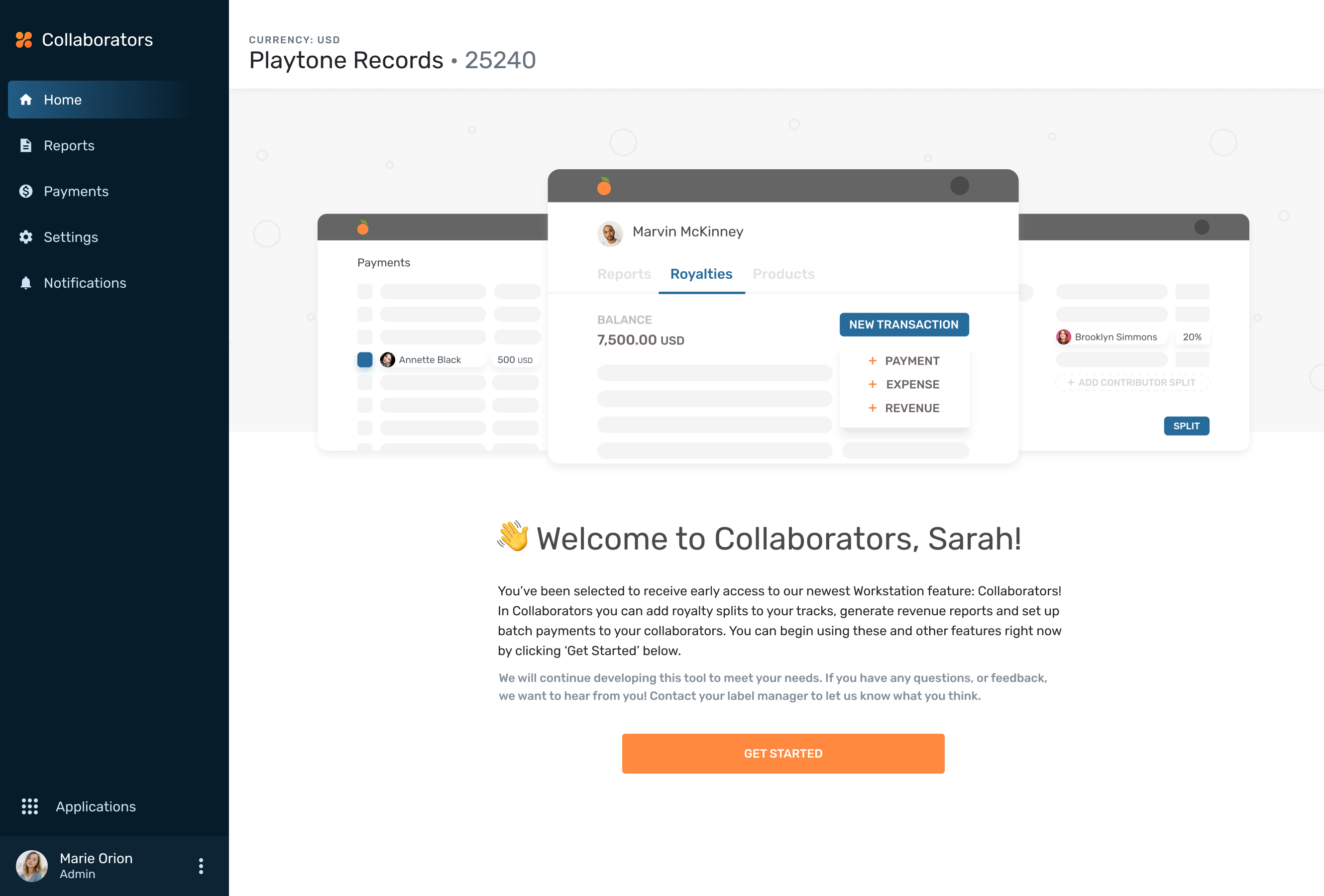
A friendly welcome was important, as the setup process was complex and we needed to engender trust
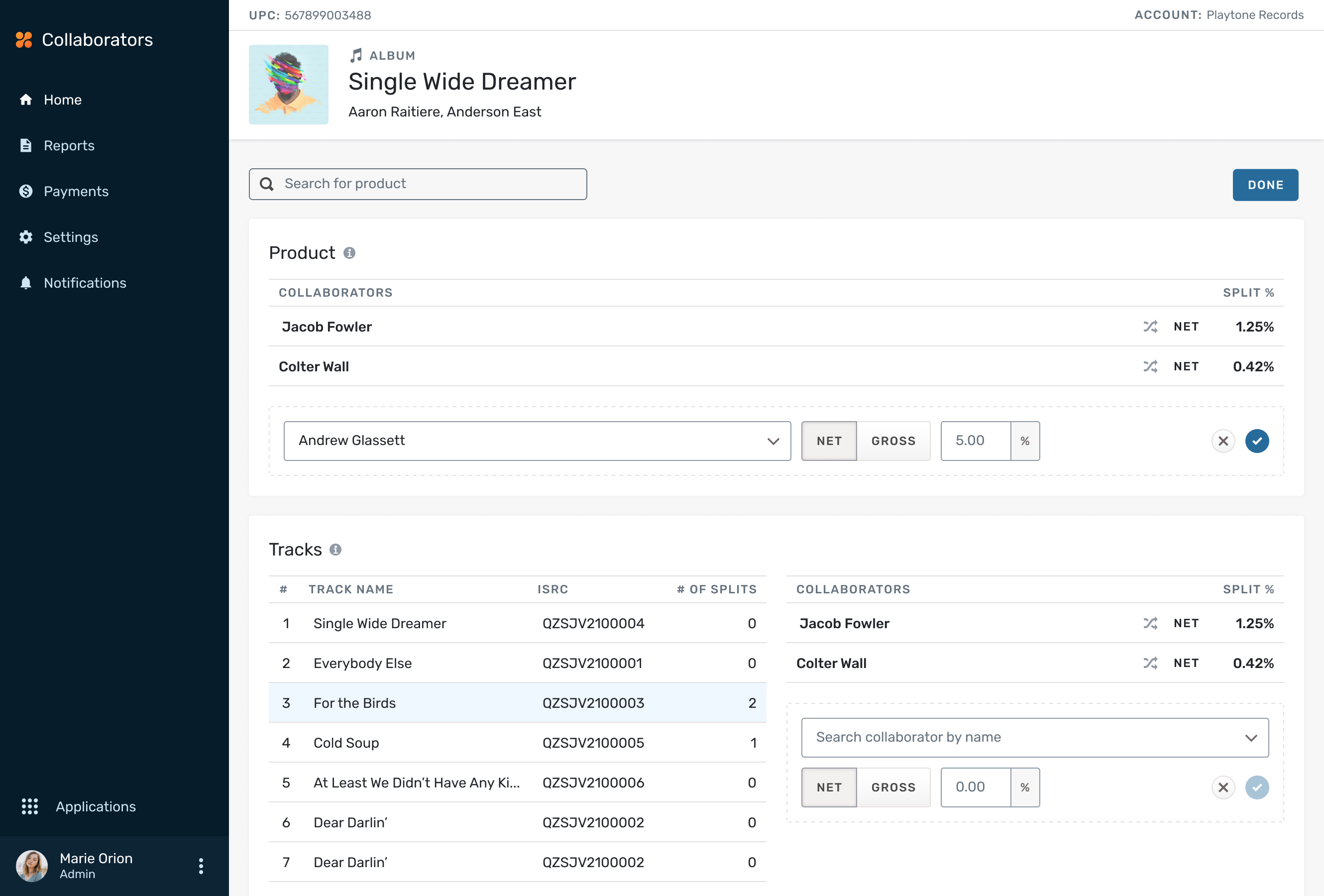
Customers decided how much revenue would be split across collaborators
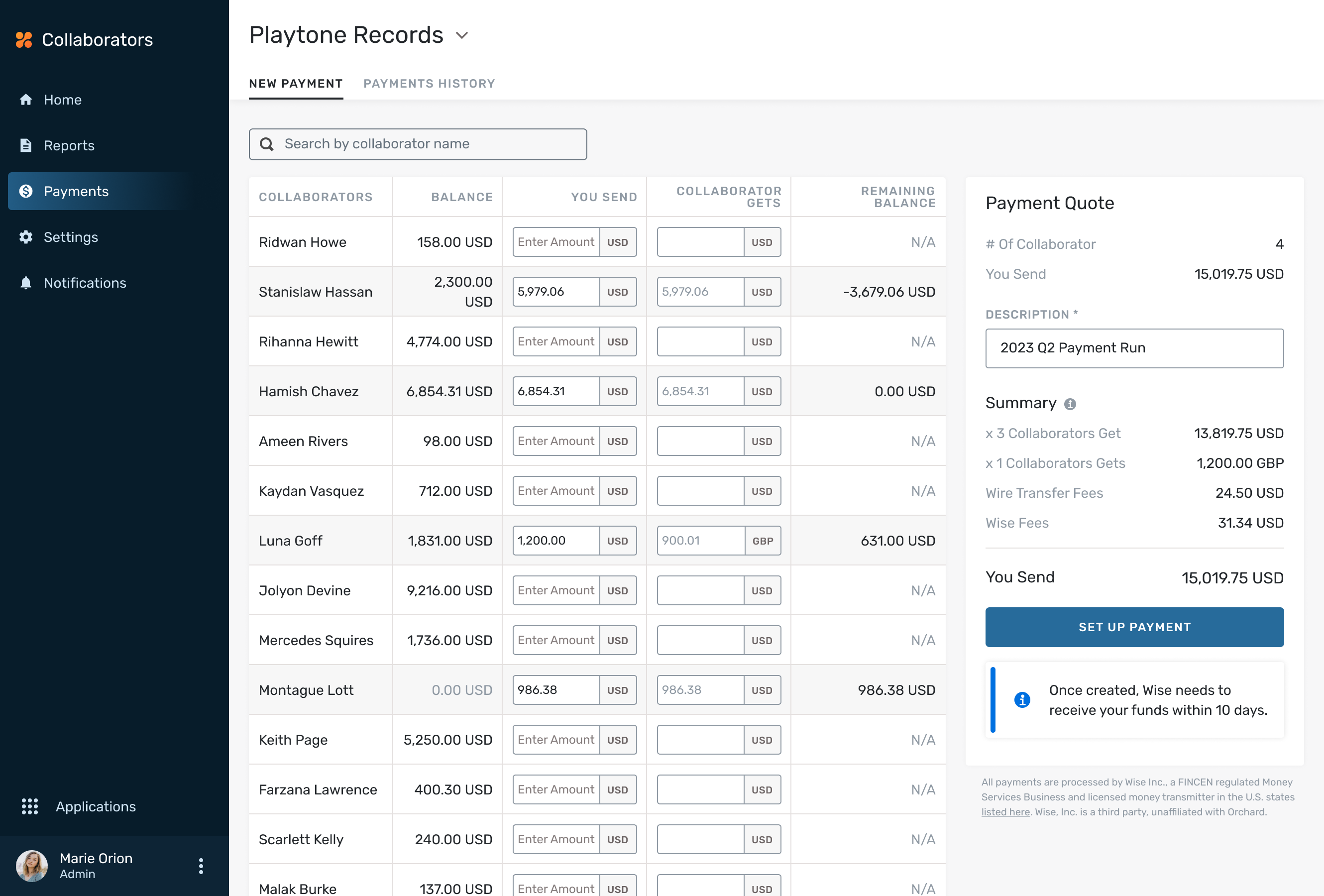
After a payment period has ended, the customer generates a payment to send out to collaborators
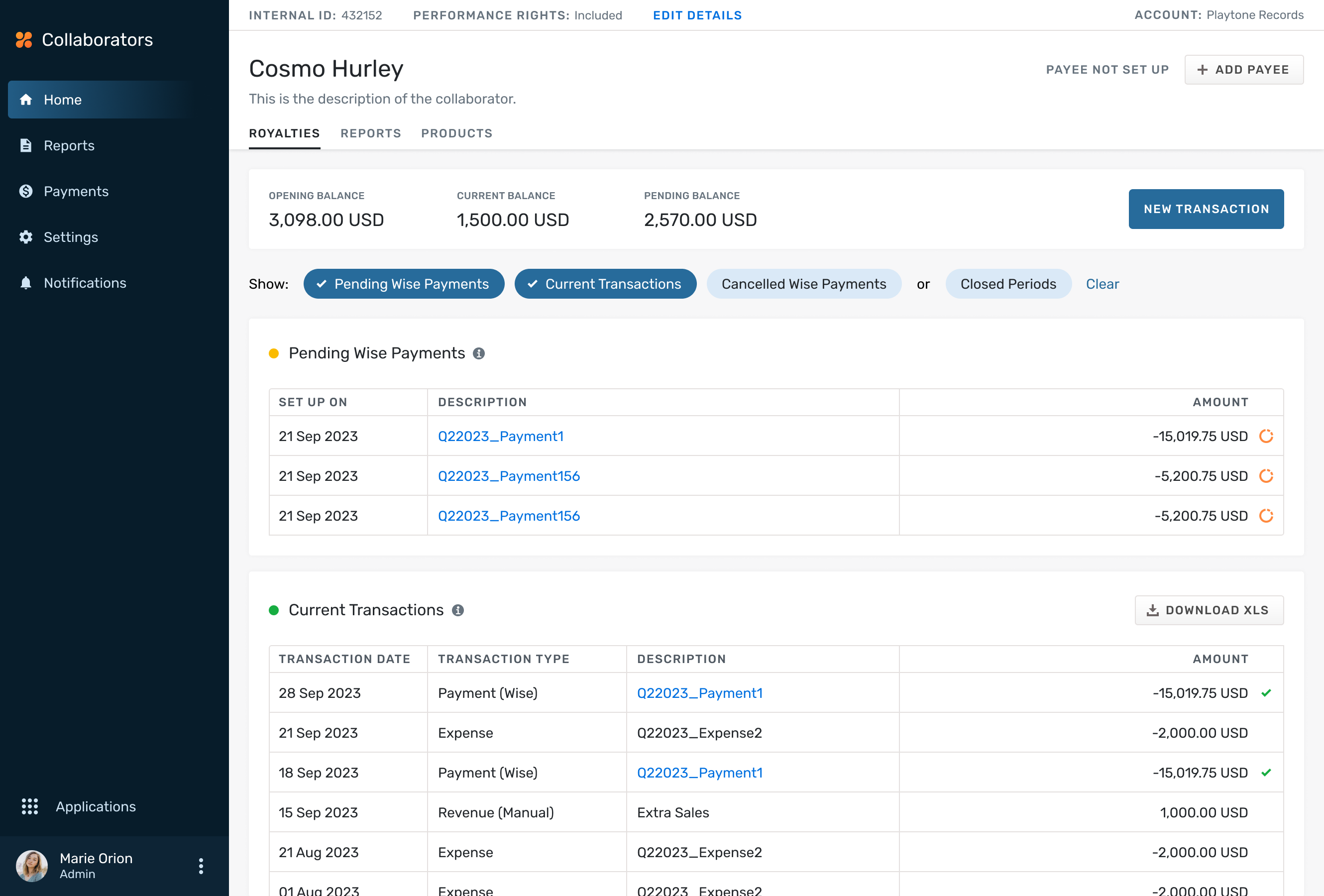
A look at the dashboard, showing the revenue split and payment history
Results
What we learned from launch
The product shipped successfully, but adoption was lower than expected. This led to important
insights about product-market fit and the real-world constraints our users faced.
Learning 01
Adoption was lower than expected
Customers with small numbers of collaborators may not need this product
Some labels pay upon receipt of invoice and don't need batch payments
Labels have existing payment methods they're happy with — reluctant to change
Learning 02
Payment integration was the blocker
Confusion around the Wise (payment processor) integration
Lack of understanding of the funding process
Some territories not supported by Wise
Takeaways
What I learned
This project taught me that even with strong user research and a well-designed solution,
success depends on understanding the full context of adoption — including existing workflows,
change management, and technical integration points.
Lesson 01
User research should extend beyond feature needs to understand workflow inertia and
switching costs. People need compelling reasons to change established processes.
Lesson 02
Third-party integrations can make or break product adoption. Payment processors,
in particular, need to support all user territories and be easy to understand.